The internal tags which represent the data streamed from *.abc files are exposed to the user on the Alembic generator now
There now is a placeholder tag for the Subdivision Surface Weight tag
The subdivision method is now written to and read from the Alembic SubD scheme
Alembic generator has a new option for Creases and Corners used for weights of SDS objects
Alembic generator has a new value to be able to scale SDS weights
New Import options
"Color Maps" option allows color information (RGB and RGBA) to be imported and Vertex Color tags to be created
Importing "Points" with "As Polygon Object" reads the color (RGB or RGBA) property and creates a Vertex Color tag per point mode for it
Importing "Points" with "As Particle Geometry" reads RGBA (vector4d) color arrays now
"Creases and Corners" - reads creases and corners as point and edge weights of SDS objects
New Export options
"Vertex Colors" - the RGBA data of all Vertex Color tags is exported
"Display Colors to Vertex Colors" - writes the display color of the object as vertex color information
"Vertex Colors" + "Points Only (Geometry)" options - exports also RGBA data from points mode only Vertex Color tags
"Subdivision Surface Weights" - writes point and edge weights of SDS objects as corners and creases
Export can now be canceled
FBX
FBX module is now based on SDK 2016.2, now supports the 7.5 file format
New Import options
"Vertex Colors" - imports vertex color elements and creates a Vertex Color tag for each of them
"Convert Grayscale Vertex Colors to Vertex Maps" - in case there are only grayscale colors, a Vertex Map tag will be created instead of a Vertex Color tag
"Subdivision Surface" - an SDS Weight tag will be created if at least one crease layer was found
New Export options
"Vertex Colors" - color information of all Vertex Color tags is exported for every mesh
"Subdivision Surface" - if an SDS Weight tag exists, the weight information for points and edges is written as two crease layers
Support for Allegorithmic Substance Engine
Substance archives (.sbsar) can be loaded
The Substance Asset Manager can be used to organize the Substance assets in the scene
The Substance Shader is used to reference Substance asset outputs in Cinema 4D's material system and all other parts of Cinema 4D that support shaders
New Substance Asset mode in the Attributes Manager
New Substance Engine section in the Preferences
New Substance Engine sub-menu in Pipeline menu
C++/Python API supports Substance
Support for the DDS texture file format (loader)
BP exchange supports 3ds Max 2017
OBJ
Import and Export presets can now be saved and loaded
The Material Mix Mode can now be specified
MATERIAL
Variation shader enhancements
Support for more than one texture
UV Rotation can now be quantized and UV can be flipped
New "Invert Direction" option for Ambient Occlusion
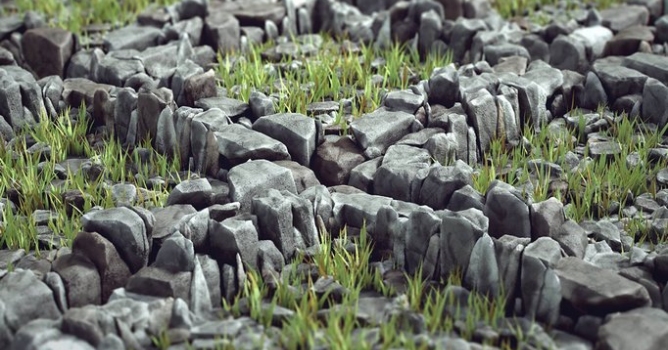
New parallax mapping support in the Bump channel
New Shadow Catcher shader
New Thin Film shader
MODELING
New Knife tools
Interactive modeling workflow using new on screen handles and gizmos
Line Cut tool
Cuts polygon objects and splines with polyline cuts
Cut line can be interactively adapted via control points
Cuts can be inside of polygons
Several slice modes
Supports snapping and constraints
Plane Cut tool
Planar cut for polygon objects
MOGRAPH
New Effectors
Push Apart effector Helps reduce or avoid clone overlap quickly
New distribution modes for MoGraph Cloner and Matrix Objects
Honeycomb Array
New Voronoi Fracture generator
Full dynamics support
TEXTURE BAKING
Calculation of vector maps of all types has been improved
Intensity based maps (intensity, intensity centered, red-green) now use a basic ray casting technique to measure displacement between the base and the sculpt mesh
Baking normal maps only also uses the basic ray casting technique to sample normal vectors on the sculpt mesh
VIEWPORT
Shading/Vertex normals can now be displayed in the viewport
New "Screenspace Ambient Occlusion" option
New "Reflections" option shows an approximation of the Reflectance Channel in the viewport
Supports multiple layers, masks, fresnel and roughness
New "Tessellation" option shows the effect of displacements in the viewport
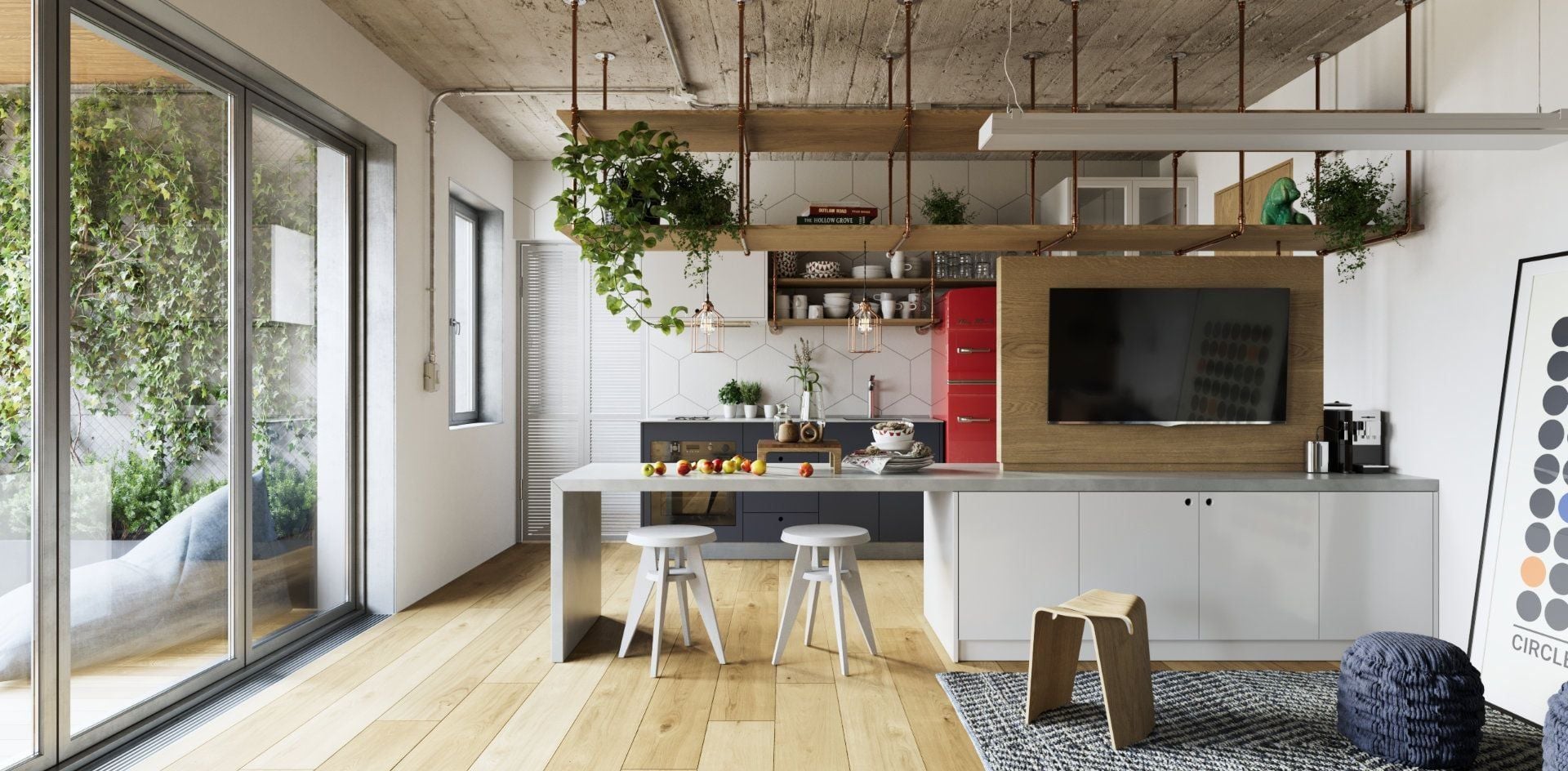
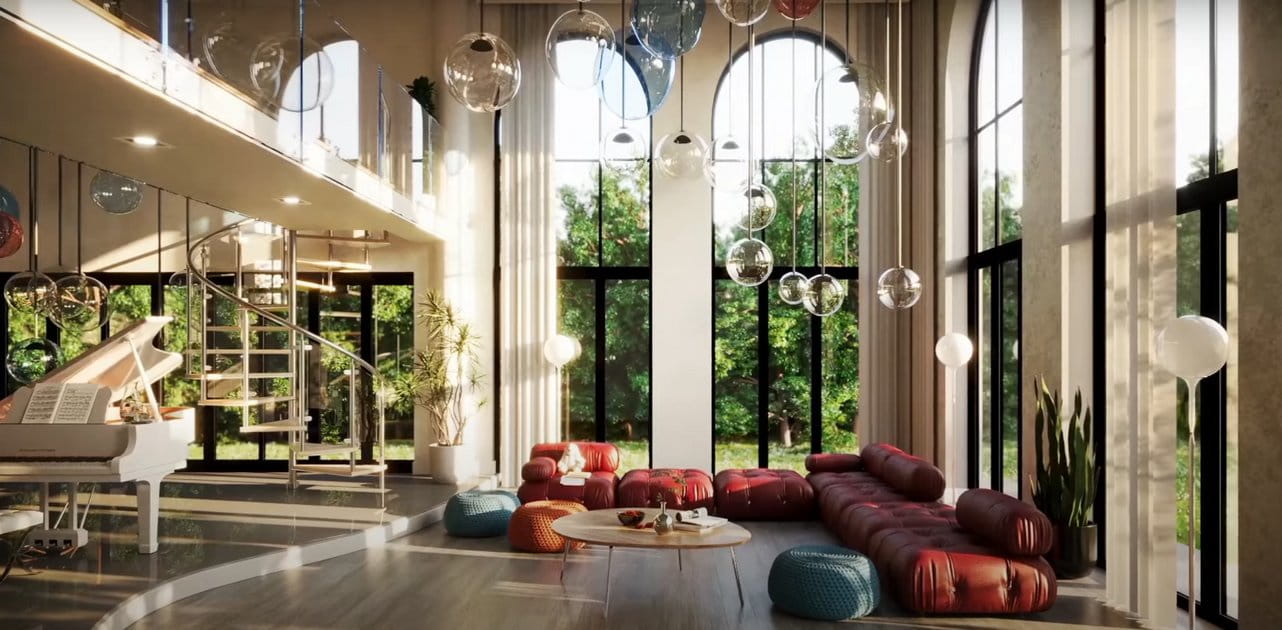
In this walkthrough, we guide you through the process of building a polished 3D interior scene inspired by the cover of Archmodels vol. 306 – Table Sets.









 Customer zone
 Your orders
 Edit account
 Add project
 Liked projects
 View your artist profile
COMMENTS