Search
Cart
Sign in
  • offerCustomer zone
  • offerYour orders
  • offerEdit account

  • offerAdd project
  • offerLiked projects
  • offerView your artist profile

  • Dark mode

We care about your privacy

We use cookies to provide you with the best possible experience. They also allow us to analyze user behavior in order to constantly improve the website for you. The consent is voluntary. You can withdraw it at any time or renew it in Cookie settings on the home page. Withdrawal of your consent does not affect the lawfulness of processing performed before the withdrawal. Privacy Protection Policy
Accept all
Accept selection
Reject all

How Codecs Work - Tutorial

David Kong 2014-09-08 10:04 tutorial  > Making of  > modeling

If you work with video, it's vital to understand how codecs work and how they change your image.

In this tutorial, David Kong covers all of the big concepts behind codecs, breaking it down into understandable pieces. While the nitty-gritty of compression algorithms can get complicated, all of the main ideas are quite simple.

Here's an overview of the topics covered:

  • What a codec is - And how it differs from a container.
  • Different types of codecs - And why I frequently use 4 different codecs on a single project.
  • Bit Depth - What it means and why it matters.
  • Chroma Subsampling - 4:4:4, 4:2:2, and 4:2:0, and when it becomes an issue.
  • Spatial Compression and Blocking - One of the most common artefacts you see with normal work.
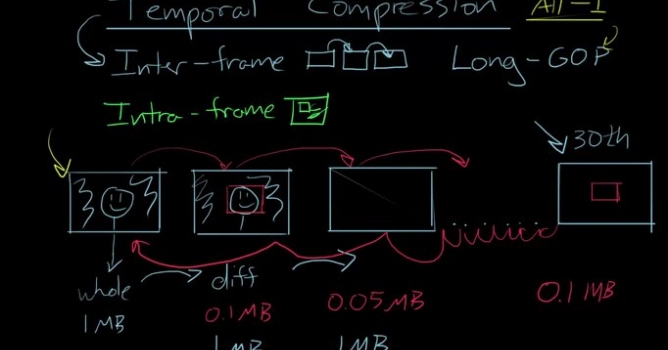
  • Temporal Compression - Long-GOP codecs, inter-frame compression, and ALL-I codecs.
  • Lossless vs. Lossy compression - How image compression differs from data compression.
  • Bit Rate - How to calculate bit rates and the differences between kbps/kBps/Mbps/MBps.
  • Raw - Briefly, the difference between Raw, compressed, and uncompressed video.
Author: David Kong Editor: Michal Franczak
Tags: codecs
You may also like...
Using 3D building models for industrial and commercial visualizations

Using 3D building models for industrial and commercial visualizations

In professional visualization, buildings are more than background elements. They define context, scale, and clarity for industrial and commercial projects. Well-prepared 3D building models help viewers read a scene instantly and understand its purpose without relying on technical descriptions or supporting text
×

LEAVE A COMMENT

You need to be logged in to leave a comment. Don't have account? Register now.