This is a 3D cartoon illustration created in my space time for self improvement. This dragon was originally designed by my favorite artist, Ben Henry. He is also known by his nickname, 'Roundeye', on the Internet communities where he posts. The title of this work, 'Roundeye Dragon', comes from his nickname. I am very honored and grateful to have been given Ben's generous permission to recreate his 2D drawing in 3D.
Before start anything, i was send a request about "permission to recreate 2D drawing in 3D" via email to Ben Henry. Then he was agree the permission. Thanks Ben.
MODELING
Here is the original 2D drawing from Ben Henry
I start modeling in Zbrush, my technique was use Zsphere to created a base mesh. Later on export it into Maya to refine modeling and re-topology it.
Import into Zbrush again. To make sure i sulpt with the right portpotion, i never start from detail.
Reseach around from internet about dragon skin. Download them as refereces.
To get my own the reptile's alpha later use in Zbrush. I was import those references into Photoshop and made fews type of alpha.
This is what i got after sculpt by own made alpha
The final was done after wings, skin detail and teeths added
TEXTURING
The dragon's texture was done hand-painting in Zbrush. My technique used called Polypainting in Zbrush. You need to click on the "colorize" & "Disable UV" before paint.
I never plan to re-paint the texture in photoshop but in Zbrush. So i use Zbrush's Adaptile UVs unwrap for me. Here is the color map , cavity map and normal map export from Zbrush in Adaptile UVs mode.
MATTE PAINTING OF THE BACKGROUND
My background is a flat 2D matte painting and photomontage done in Photoshop.Mountain and trees is copy & paste by few different of photos.
To make it more cartoon illustration, I re-paint it to add more detail and also try to use photoshop's filter to change the color mood.
RENDERING & COMPOSITING OF DRAGON
I used mentalray's sss shader for the dragon. My scene was light up by 3 area lights and one mentalray's IBL. Those lights are Main Light, Fill Light and Back Light. Mentalray's IBL are my scene's ambient light.
To convenient my compositing works. I was separate all the light passes ,cavity passes and specular passes. So that i can adjust the light opacity anytime to match the background.All passes was composite in Photoshop with "Screen" blending mode, except the Cavity passes with "ColorBurn" blending mode.
FINAL
This is the final image after color correct in Photoshop.
Working in CG and archviz often means balancing creative intent with production realities. Human presence can support scale, context, and clarity, but it also adds another layer of decisions. Ready-made 3D character assets help keep visual focus where it belongs without expanding the project scope beyond its real needs
In professional visualization, buildings are more than background elements. They define context, scale, and clarity for industrial and commercial projects. Well-prepared 3D building models help viewers read a scene instantly and understand its purpose without relying on technical descriptions or supporting text
The production pipeline in CG and visualization is built on a sequence of clear decisions. Each stage depends on how information is defined, shared, and preserved. 3D models serve as digital assets that translate abstract ideas into structured visual data and consistently carry them through to the final render
In professional CG and architectural visualization, efficiency depends on structured decision-making and reliable resources. Using grouped 3D assets allows us to focus on scene logic, composition, and project consistency instead of repetitive asset preparation and library management.
3D furniture models support structured, predictable interior design workflows in professional archviz. In projects where deadlines, coordination, and visual consistency matter, ready-to-use assets reduce friction and enable teams to focus on spatial decisions rather than repetitive preparation.
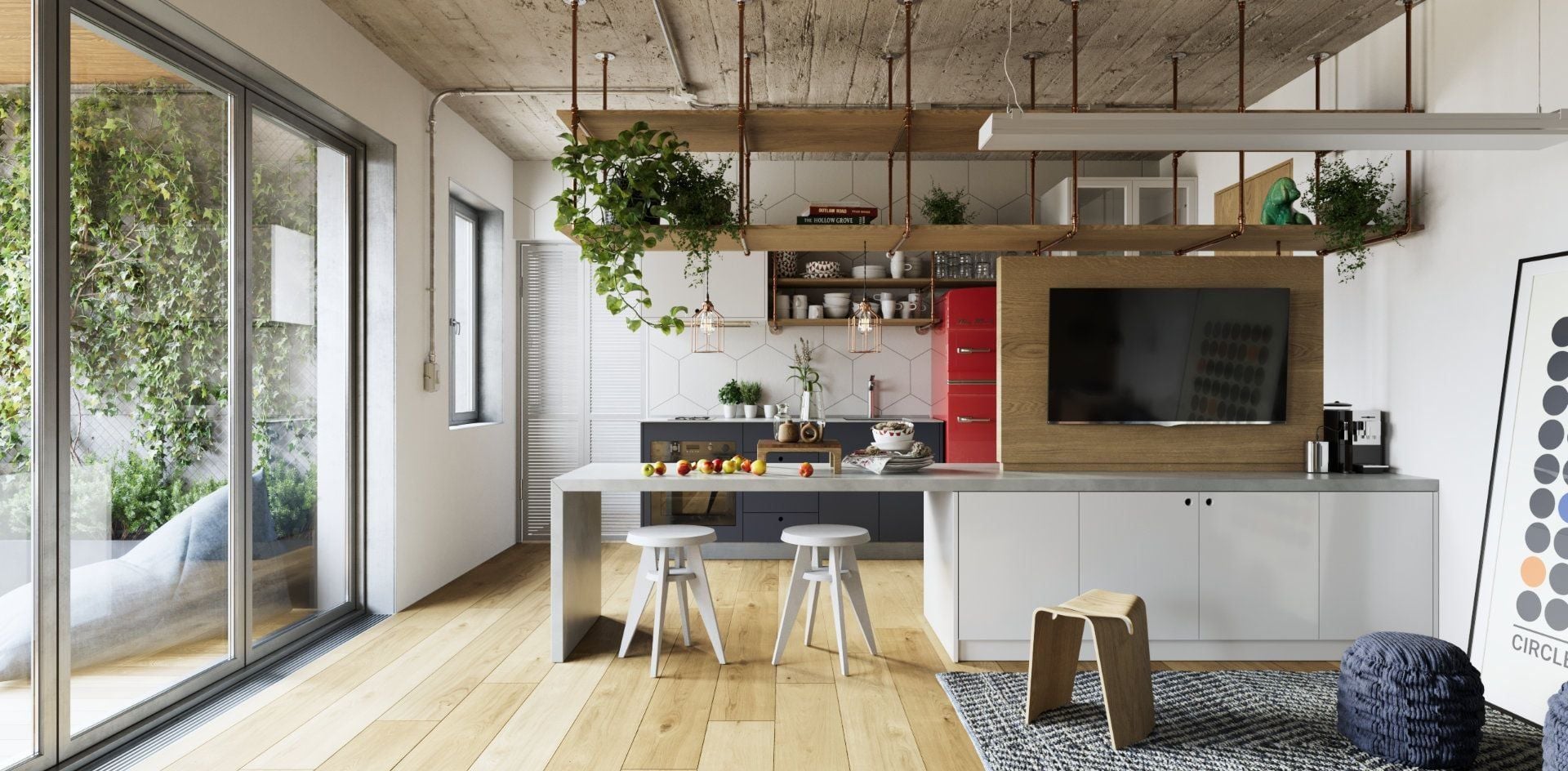
In this walkthrough, we guide you through the process of building a polished 3D interior scene inspired by the cover of Archmodels vol. 306 – Table Sets.
COMMENTS