Search
Cart
Your cart - 0 items
Total: € 0
Total: € 0
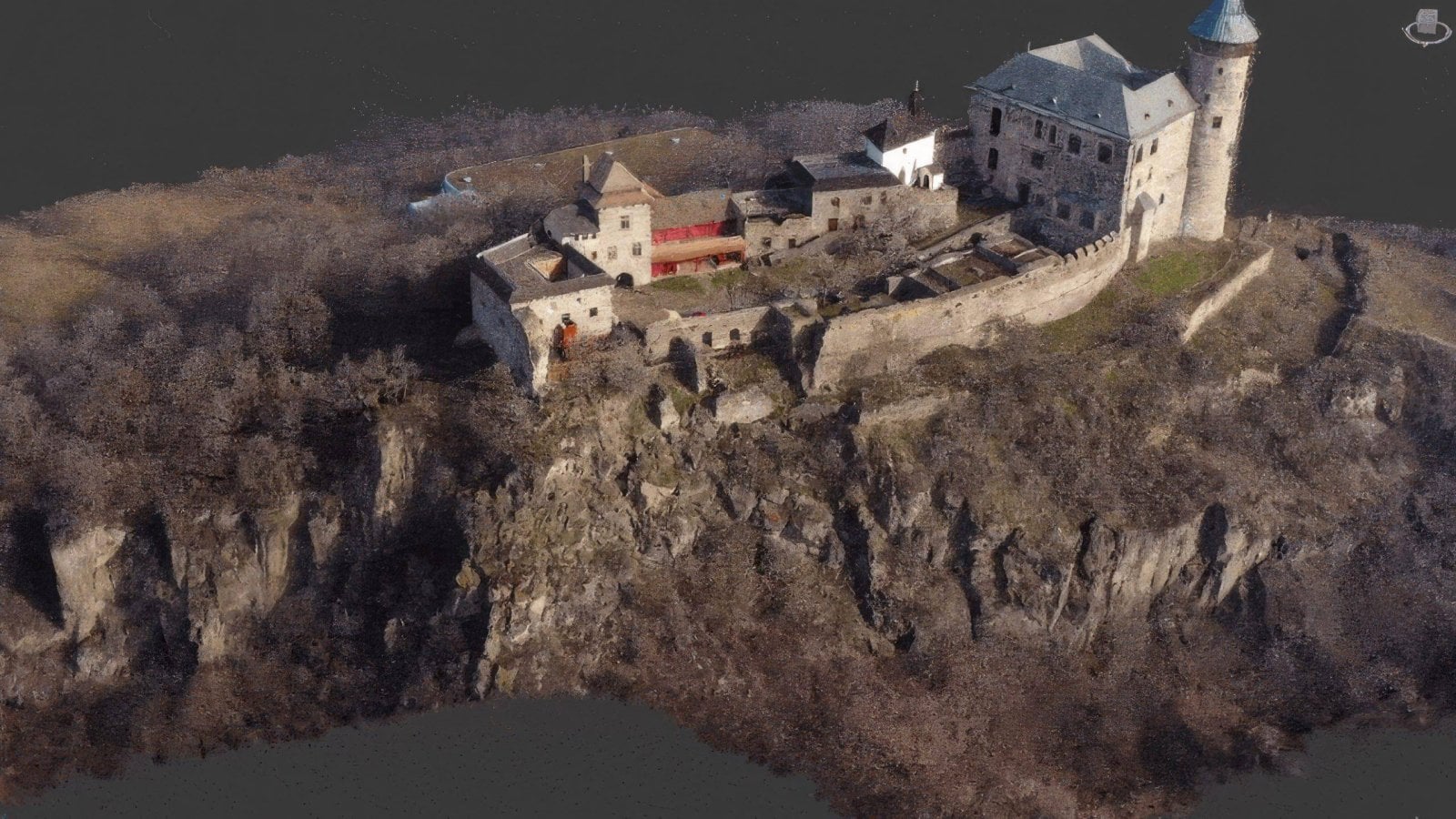

Autodesk released 3ds Max 2027.3 in November 2026 with two substantial shifts in how archviz studios can work: native Gaussian Splat import and viewport rendering, and an MCP Server that allows external AI clients - Claude, Cursor, and others - to read and modify scenes via natural language prompts, all running locally on the artist's machine.
The Gaussian Splat workflow moves from fringe tool to core pipeline. 3ds Max 2027.3 now imports 4D Gaussian Splats and renders them directly in the viewport using a splat shader. According to Autodesk Help Documentation, "Gaussian Splats now display directly in the viewport using a splat shader, with back-to-front sorting and true splat color, so you can evaluate 3DGS scenes before rendering." This eliminates the IPR workaround that studios have relied on; artists can iterate on splat-based compositions and relighting without leaving the main viewport or switching renderers.
The agentic AI layer arrives through the MCP Server, a tech preview that runs locally. According to Autodesk Help Documentation, "External MCP clients can now use the 3ds Max MCP server to read and change your 3ds Max scene." The server implements the Model Context Protocol standard and is toggled on in preferences. It connects Claude, Cursor, and other MCP-compatible AI clients to Max, letting them assemble geometry, modify parameters, and apply materials based on natural language instructions - all without sending scene data to the cloud. The Autodesk Assistant gains these same capabilities beyond its previous read-only inspection mode.
The release also includes Arnold for 3ds Max (MAXtoA) version 5.9.5.0 with viewport rendering instead of the previous ActiveShade-only workflow, narrowing the gap between interactive preview and final render. Point object tools expand with new types and segmentation on import; PLY export is now available. The Khronos glTF Importer and Exporter integrate natively, and Substance 3.1.1 adds OpenPBR support.
Video: Radiance Fields
Both headline features address workflows archviz studios are already experimenting with. Splat relighting - capturing real-world sites or objects as point clouds, converting them to Gaussian Splats, and recomposing them in Max - has gained traction for fast asset turnover on client revisions. Moving splat rendering into the core viewport collapses a workaround into native functionality, cutting iteration time and removing the friction of juggling renderers or IPR windows. Studios that have built Max-to-splat pipelines can now work more fluidly.
The MCP Server opens agentic AI for scene assembly to shops already using AI for modeling and material setup. The key advantage is local execution: no cloud dependency, no creative data leaving the machine, and no network latency on each instruction. For studios where security or IP concerns have blocked public cloud AI tools, the MCP Server provides an on-premises alternative. The constraint is that neither the MCP Server nor Autodesk Assistant's expanded scope is fully documented in terms of what scene operations they can perform; studios will need to test the bounds of what each tool can do.
Neither feature forces change. Artists working with traditional geometry and renderers see no disruption. Shops not yet using splats or AI-assisted modeling simply skip these tools. But for the studios already pushing Max's boundaries - testing 3DGS pipelines, experimenting with AI-driven workflows - 3ds Max 2027.3 collapses two emerging practices into the core app.
Lead image: iToopSoft





LEAVE A COMMENT







|

|

|

|

|
 Customer zone
 Your orders
 Edit account
 Add project
 Liked projects
 View your artist profile

COMMENTS