Maxon's Redshift 2027.0 cuts render times by up to 15% through memory optimization and adds official Archicad integration alongside improved materials and live feedback tools.
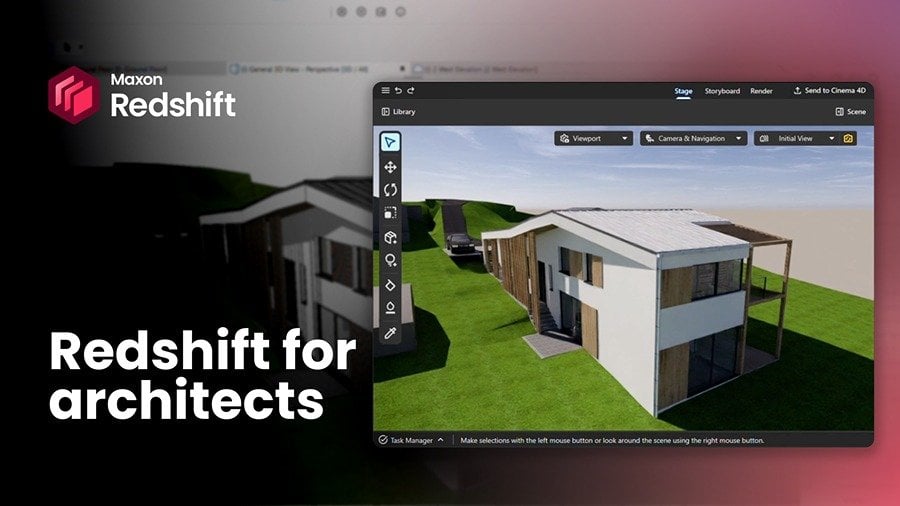
Maxon released Redshift 2027.0 on October 14, 2026, with a focus on speeding up GPU-based architectural visualization workflows. The headline improvement is a rework of memory management and VRAM architecture that reduces render times by up to 15% through reduced VRAM overhead and faster scene initialization, according to Maxon support documentation. That translates to faster project turnaround for studios already committed to GPU rendering and potentially smaller hardware investment per workstation.
The release expands CAD platform support with official integration for Graphisoft Archicad, joining existing integrations with Revit and Vectorworks. This removes a significant workflow barrier for architects working in Archicad who want to maintain a native pipeline from design model to final render.
Materials and real-time feedback also advanced. Redshift 2027.0 introduces ray-traced refraction for transparent and glass materials—a visible quality step for architectural interiors with glazing. A new Custom Material Creation feature allows artists to build materials from scratch using physically based rendering controls. A Light Manager lets architects create and manage supplemental Redshift lights independently of the CAD model, useful for test renders before final scene export.
Redshift Live, the real-time viewport tool, gains ray-traced depth of field and light spread, though volumetrics, hair and point clouds remain unsupported. These incremental improvements support faster client-side feedback without jumping to a separate application.
Host-specific updates fill gaps across the platform. The 3ds Max edition now supports native tyFlow volumetric simulations. Cinema 4D adds Auto Focus Distance, which automatically sets focal distance to the object in the center of frame. Maya's Redshift integration now uses the same optical camera and backplate system as other host applications and supports native Maya Light Lister, addressing a long-standing parity issue.
The procedural Fur Object, now available in 3ds Max, Cinema 4D, Houdini and Maya, extends beyond character work: architectural contexts can use it for grass, foliage and other organic detail. NVIDIA's RTX Spark superchip support extends GPU rendering to laptops and mobile workstations, widening the pool of capable hardware.
Video: CG Channel
What this means for archviz budgeting and pipelines
The memory optimizations and stated 15% render speed improvement matter directly to project margins and hardware spend. A studio running tight turnarounds on complex scenes could see measurable time savings, though independent benchmarking under varied scene complexity would clarify whether these are typical or best-case gains. Maxon has not supplied universal benchmark data, so results will vary with hardware, scene complexity and render settings.
Archicad integration removes a friction point for architectural practices that design in that platform. Rather than exporting to an intermediate format or using third-party bridges, the official integration keeps the workflow native and predictable.
Ray-traced refraction is a quality step visible to clients, especially in interior shots where glazing reflects light and depth. For studios competing on render realism, this is a practical upgrade worth demonstrating on next project.
Pricing remains subscription-only at $49 per month or $289 per year—a shift Maxon made earlier. Studios accustomed to perpetual licensing should budget accordingly and factor rental cost into project estimates. RTX Spark support means GPU rendering can now run on capable mobile workstations, potentially deferring desktop refresh cycles for smaller teams.
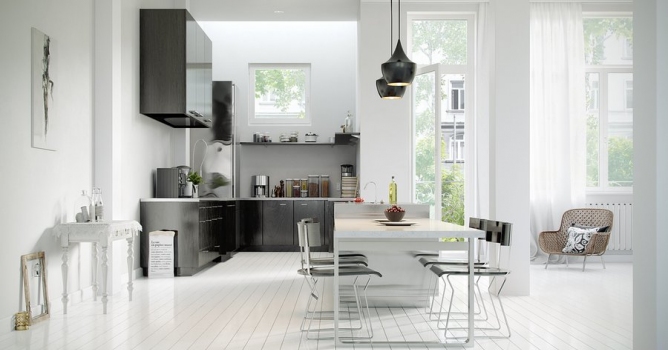
In this walkthrough, we guide you through the process of building a polished 3D interior scene inspired by the cover of Archmodels vol. 306 – Table Sets.



 Customer zone
 Your orders
 Edit account
 Add project
 Liked projects
 View your artist profile








COMMENTS