Discover the proper techniques and best practices for utilizing instances in Blender with Evermotion's tutorial. Learn how to optimize your scene, improve rendering performance, and efficiently duplicate and distribute objects using Blender's instance system.
Using instances in Blender can offer several benefits:
Efficiency: Instances can help reduce the memory and storage required by your project, as they share the same data as the original object. This can be especially useful when working on complex scenes with many objects.
Flexibility: Because instances are linked to the original object, any changes made to the original will be automatically reflected in all of its instances. This can make it easier to make changes to your project without having to manually update every instance.
Consistency: Instances ensure that all of the duplicates of your object have the same properties and characteristics. This can be useful when you need to create repetitive elements in your scene, such as trees, grass, or other objects that need to look identical.
Control: Using instances in Blender can give you more control over the distribution, orientation, and properties of the duplicates of your object. You can use modifiers and other settings to fine-tune the appearance and behavior of your instances, allowing you to create more complex and dynamic scenes.
Overall, using instances in Blender can help you work more efficiently and creatively, while also helping you maintain consistency and control in your projects.
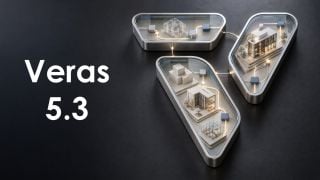
Veras 5.3 introduces NODES, a visual workflow builder now in Beta that lets users generate parametric geometry and bake it directly into Revit, Rhino, or SketchUp. The system shifts Veras from rendering-first to a full generative design platform with interactive design tools.
SketchUp 2025–2026 has added native PBR materials, AI image generation, and real-time rendering plugins like Lumion View, letting archviz artists produce photorealistic images without leaving the viewport. This collapses the traditional design-to-render pipeline.
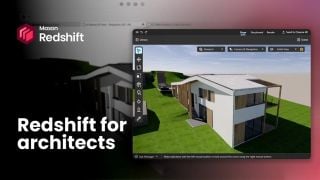
Maxon's Redshift 2027.0 cuts render times by up to 15% through memory optimization and adds official Archicad integration alongside improved materials and live feedback tools.
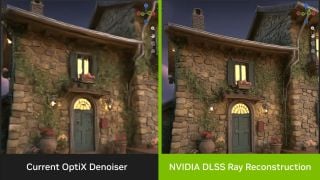
Blender 5.3 arrives November 10 with DLSS 4.5 Ray Reconstruction, an AI-powered denoiser for Cycles that works on RTX 20–50 series cards. The upgrade promises faster interactive lighting workflows at near-final quality.
Chaos released V-Ray for Blender 7.4 with Windows ARM64 compatibility, Phoenix Ocean textures for exterior scenes, Quick Sun Caustics for realistic lighting, and tools to organize large asset libraries and migrate from Blender's native renderer.
Maxon's October 2026 release adds procedural vegetation scattering, reworked GPU memory management in Redshift, and liquid simulation—streamlining environment work and viewport iteration for archviz studios.
A free community plugin now lets 3ds Max users with older GPUs access neural rendering via DLSS 5, potentially speeding up renders without hardware upgrades.
Veras 5.3 introduces NODES, a visual workflow builder now in Beta that lets users generate parametric geometry and bake it directly into Revit, Rhino, or SketchUp. The system shifts Veras from rendering-first to a full generative design platform with interactive design tools.
In this walkthrough, we guide you through the process of building a polished 3D interior scene inspired by the cover of Archmodels vol. 306 – Table Sets.



 Customer zone
 Your orders
 Edit account
 Add project
 Liked projects
 View your artist profile













COMMENTS