Evermotion: More Than an Asset Library
How Evermotion became a full-scale production partner for archviz, automotive and synthetic data.


Total: € 0
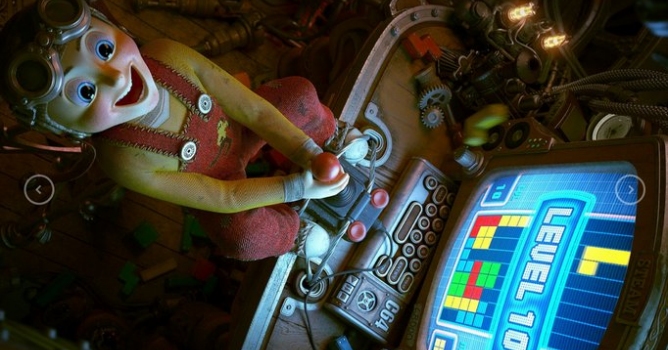

With significant optimizations to the ray tracing core, Brute Force GI, Progressive Path Tracing, Reflections, Refractions and more are running up to 5x faster; while the new Progressive Production Renderer brings a new era of fast set-ups and quick iterations.
“When your customers come from a variety of industries like architecture, product design, games, and VFX, the feature requests can be fairly diverse,” said Vlado Koylazov, Lead Developer and Chaos Group co-founder. “But speed and simplicity benefit all artists, so they are at the core of 3.0’s development.”
Simplicity starts with V-Ray 3.0’s new interface. Designed with new and experienced users in mind, three UI modes (Basic, Advanced, and Expert) can be selected to match an artist’s preference. The new V-Ray toolbar includes Quick Settings with dropdowns for production-ready presets for common uses like Archviz Exterior, Archviz Interior, and VFX. Settings for Quality and Shading Rate can be fine-tuned with easy-to-use sliders, making the entire process highly intuitive.
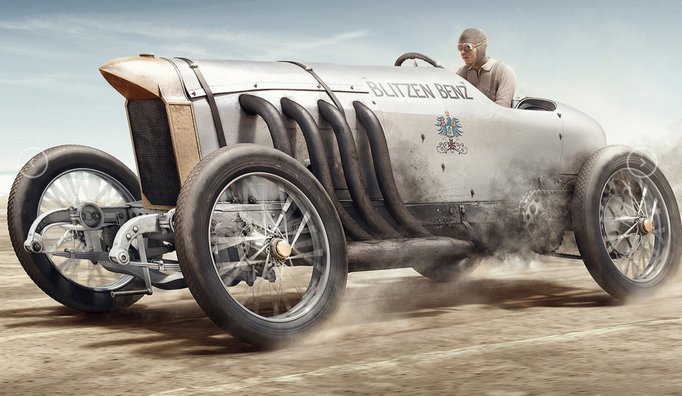
According to beta testers, the speed at which V-Ray 3.0 can produce high-res stills and animations is generating a buzz in the design community. “V-Ray 3.0’s new Progressive Renderer was the talk of our recent 3ds Max London User Group,” said David Bullock, Partner at creative agency Hayes Davidson. “Iterating in real-time should really help speed up our workflow, and we’re definitely looking forward to putting it into production.”
VFX artists will find that V-Ray 3.0 offers improved Subsurface Scattering (SSS) including options for object-based and ray traced illumination, faster hair rendering speeds (up to 15x), view-dependent tessellation that automatically smoothes hair curves, and a dedicated Skin Shader with layered reflections. Now with UDIM and UVTILE support, it’s even easier to move MARI and Autodesk® Mudbox® assets into V-Ray.
“Our game cinematics are usually packed with epic action scenes, huge environments, multiple characters with hair and SSS, fire, explosions, debris, all with 3D motion blur and render passes. That’s a lot to work with, but V-Ray makes it easy to get the job done,” said Kevin Margo, VFX Supervisor at Blur Studios. “3.0 is something to be excited about.”
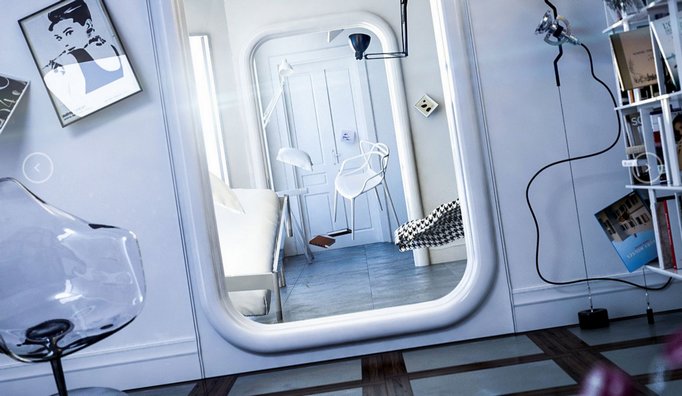
As an industry standard for large environments and complex scenes, V-Ray’s recent use on Industrial Light & Magic’s (ILM) “Star Trek Into Darkness,” “Pacific Rim” and “The Lone Ranger” has proven why it’s become such a dependable part of the pipeline for the digital environments and matte painting team. "When we started ‘The Lone Ranger,’ we changed some of the toolsets under the hood: we went strictly over to 3ds Max, using V-Ray as our renderer. That was the final piece of the puzzle. We were getting not only great render results, but great render throughput: it could handle everything we were throwing at it,” said Dan Wheaton, Digital Matte Supervisor at ILM.
V-Ray 3.0 offers a number of additional workflow shortcuts, technical advances and support for open sources technologies. These include:
You can Buy V-ray 3.0 in Evermotion shop



LEAVE A COMMENT




|

|

|

|

|
 Customer zone
 Your orders
 Edit account
 Add project
 Liked projects
 View your artist profile
COMMENTS