Save time, reduce stress, and focus more on the creative side of your projects.
Rendering is often the slowest aspect of an architectural visualization (Archviz) project. High-resolution images, intricate interiors, and animations can occupy your workstation for hours or even days. By learning how to streamline your rendering process and utilize additional resources effectively, you can save time, reduce stress, and focus more on the creative side of your projects.
From this article, you’ll learn:
Common rendering bottlenecks in Archviz
Why hardware upgrades are not always the solution
How render farms fit into a professional pipeline
Key factors to consider when choosing a render farm
Practical tips to optimize your rendering workflow
Rendering Bottlenecks Every Archviz Artist Faces
Even a well-prepared scene can become a time sink during rendering for various reasons.
Iteration and Look Development
Achieving realism in your projects requires multiple test renders to refine elements like lighting, materials, and camera placement. Each adjustment to an HDRI, reflection, or material can significantly add to rendering time. In detailed interior scenes, these small iterations can accumulate, potentially adding hours to your project timeline without anyone noticing.
Final Frames and Animations
High-quality animations at 4K or larger resolutions push local machines to their limits. Single workstations render frames sequentially, meaning even short sequences can take days. Exterior scenes, volumetrics, and complex geometry only worsen the bottleneck.
Late Revisions
Even when you have everything well prepared and feel you are ahead of things, there is an external factor you cannot control: client-driven changes. And these often arrive near deadlines. A small adjustment may require re-rendering dozens of frames. Without scalable resources, revisions can derail schedules and compromise quality.
Why Upgrading Hardware Isn’t The Solution
A solution that comes to mind is adding faster hardware. But that comes with high costs and constant maintenance, and is most of the time only worth it if the hardware is constantly in use.
The more efficient solution is to access additional resources only when needed, without buying, maintaining, or upgrading hardware to provide permanent capacity. This is done via a render farm.
Render Farms: The Scalable Solution
Render farms distribute frames across multiple machines, enabling parallel processing. This is especially effective for:
Animations with hundreds of frames
Large-scale exterior scenes
High-resolution stills
How It Works in Practice
A render farm like RebusFarm divides tasks across many nodes, completing in hours what might take days on a single local workstation. Complex features such as V-Ray global illumination, volumetrics, and high-poly proxies are rendered reliably and much faster than on a local machine.
Seamless Pipeline Integration
The way render farms integrate into the workflow differs. RebusFarm has a custom plugin that integrates directly into your 3D software and, therefore, lets you render on their farm right from your 3D software. Textures, proxies, and HDRIs are automatically collected, checked, and uploaded, ensuring the scene renders exactly as intended.
Pro Tip: Always run a small test batch to verify that materials and lighting behave correctly before sending the full animation to the farm.
A Practical Workflow Example
Scene Preparation: Build geometry, assign materials, and set up lighting locally.
Test Renders: Check individual frames for realism, material accuracy, and pricing.
Farm Submission: Upload the final frames via RebusFarm’s plugin. Assets are automatically bundled.
Start Rendering: Frames are processed simultaneously across multiple nodes.
Download and Review: Completed frames are downloaded automatically to your chosen folder.
This workflow keeps your local machine free while massively reducing overall render time. Even animations with hundreds of frames can be completed within hours instead of days.
Choosing the Right Render Farm for Archviz
Not all farms are built the same. Check the following criteria to choose the best render farm for your needs:
Compatibility: Full support for your 3D software and renderer, including distributed rendering features and plugins.
Stability: Reliable rendering of large textures, high-poly proxies, and complex materials.
Predictable Costs: A credit-based payment is the best for accurate budgeting. Always use a calculator or send test frames to get a pricing overview before sending the entire project.
Security: Client data can be sensitive. Make sure the render farm has the necessary measures active and adheres to them.
Workflow Integration: Look for a render farm that offers plugins with setup and automation to collect your assets.
Reliable Support: In the best case, you do not need to get in touch with the support team, but in case something does not go according to plan, make sure the offered support is available and reliable.
Test Credits: Most render farms offer free credits to test their service. Use these trial offers to try the service and see if it fits your needs before committing.
Pro Tip: Check whether the farm supports the render settings you are using, as these can significantly affect the final look.
Optimizing Your Workflow
Even with a farm, preparation is key. Make sure you check the following things:
Organize Scenes: Remove unused assets to reduce errors.
Optimize Textures: Compress or resize excessively large files.
Test Frames: Validate material and lighting before full submission.
Batch Renders: Group frames for animations or multiple cameras.
This ensures smoother processing, reduces wasted resources, and keeps costs predictable.
Try RebusFarm on Your Next Project
If rendering slows your workflow, the best way to see the difference is to test it on a real project. RebusFarm offers free trial credits, letting you render your next animation or high-resolution scene without changing your pipeline. Focus on design and client delivery, not machine limitations.
FAQ
Do render farms change the look of my renders?
No. Properly configured, the render farm reproduces your local results exactly, including lighting, materials, and reflections.
When is a render farm necessary?
For final frames, high-resolution stills, or animations, where local hardware would take too long or risk crashing.
Is it complicated to use a render farm?
If you choose a render farm that integrates directly into your 3D software, it is not, and the usage is intuitive.
How do render farms affect deadlines?
Parallel frame processing dramatically reduces total render time, making revisions manageable and enabling faster client delivery.
Are render farms only for large studios?
No. Freelancers and small studios also benefit from scalable resources without having to invest in expensive hardware.
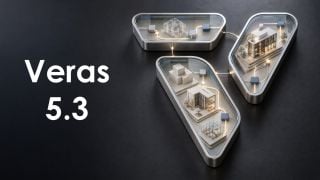
Veras 5.3 introduces NODES, a visual workflow builder now in Beta that lets users generate parametric geometry and bake it directly into Revit, Rhino, or SketchUp. The system shifts Veras from rendering-first to a full generative design platform with interactive design tools.
SketchUp 2025–2026 has added native PBR materials, AI image generation, and real-time rendering plugins like Lumion View, letting archviz artists produce photorealistic images without leaving the viewport. This collapses the traditional design-to-render pipeline.
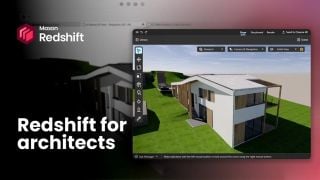
Maxon's Redshift 2027.0 cuts render times by up to 15% through memory optimization and adds official Archicad integration alongside improved materials and live feedback tools.
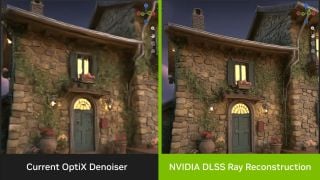
Blender 5.3 arrives November 10 with DLSS 4.5 Ray Reconstruction, an AI-powered denoiser for Cycles that works on RTX 20–50 series cards. The upgrade promises faster interactive lighting workflows at near-final quality.
Chaos released V-Ray for Blender 7.4 with Windows ARM64 compatibility, Phoenix Ocean textures for exterior scenes, Quick Sun Caustics for realistic lighting, and tools to organize large asset libraries and migrate from Blender's native renderer.
Maxon's October 2026 release adds procedural vegetation scattering, reworked GPU memory management in Redshift, and liquid simulation—streamlining environment work and viewport iteration for archviz studios.
A free community plugin now lets 3ds Max users with older GPUs access neural rendering via DLSS 5, potentially speeding up renders without hardware upgrades.
SketchUp 2025–2026 has added native PBR materials, AI image generation, and real-time rendering plugins like Lumion View, letting archviz artists produce photorealistic images without leaving the viewport. This collapses the traditional design-to-render pipeline.
In this walkthrough, we guide you through the process of building a polished 3D interior scene inspired by the cover of Archmodels vol. 306 – Table Sets.


 Customer zone
 Your orders
 Edit account
 Add project
 Liked projects
 View your artist profile









COMMENTS