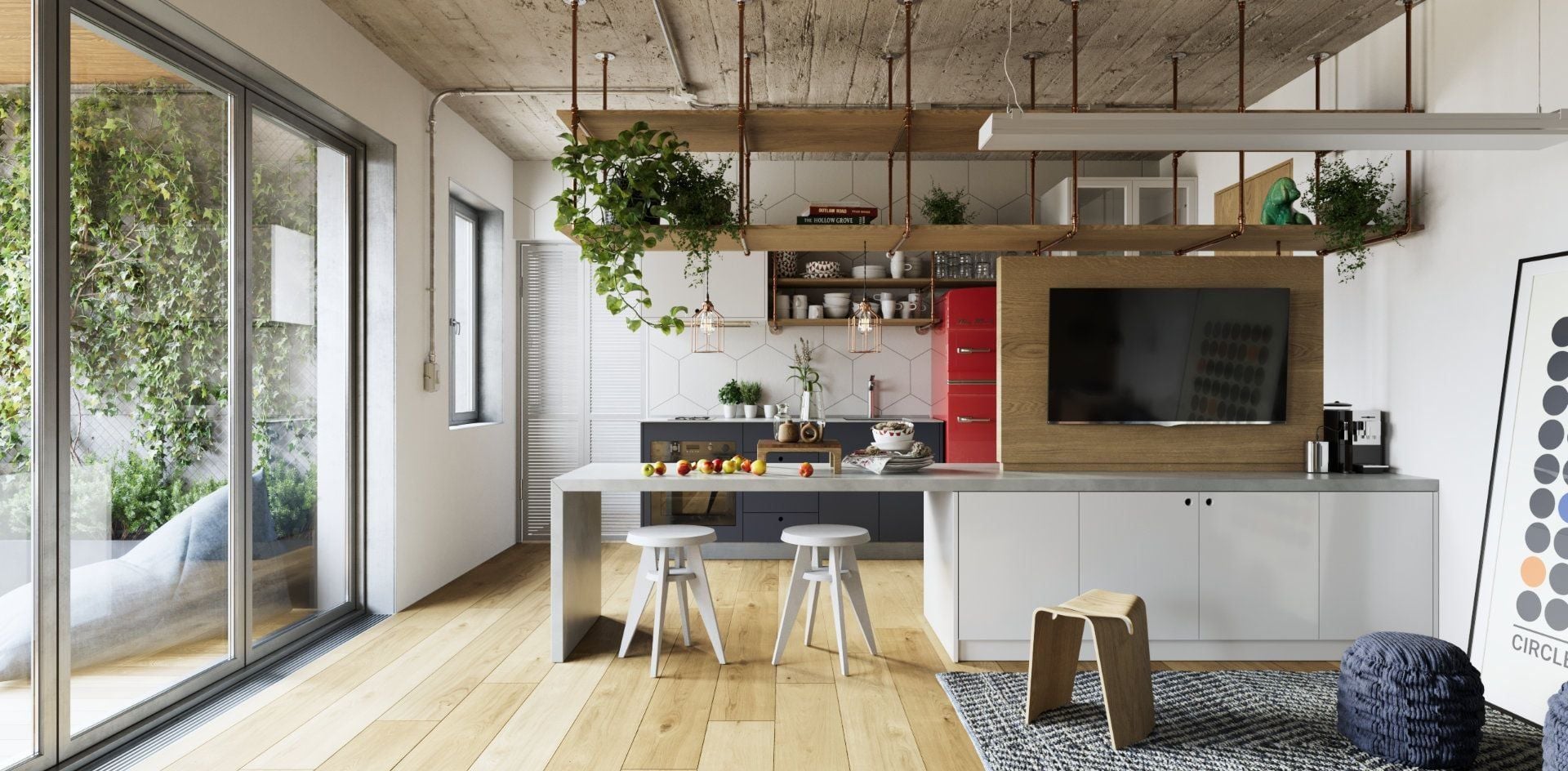
Top image - San Pedro Project by Charles Nandeya Ehouman (Sharlybg)
New features in this version:
OptiX/RTX Acceleration - The CUDA backend now can utilize RTX hardware raytracing through the OptiX library. The benefit in rendering speed depends on scene complexity (the more triangles in the scene, the bigger the speedup).
Non-Uniform Camera Bokeh - Depth of field now has support for non-uniform bokeh distributions, including custom images. In addition, bokehs can now be squashed and stretched anisotropically to simulate anamorphic lenses.
New Materials
Holdout - The holdout option can be used to make the parts of the film covered by the material transparent.
Two-Sided - The Two-Sided material makes it possible to put different materials on the front- and backfaces of a mesh.
New Textures
Wireframe
Distort - The Distort texture is basically a simplified texture mapping, which only allows to translate an input texture. However, the translation offset can be textured (which isn’t possible in the regular texture mapping). So it can be used to perturb one texture with another.
Brick texure now with pseudo-random coloring per brick
Texture Bombing - The new “Bombing” texture can be used to distribute a stencil map over a background, with various randomization options.
Randomized Tiling for Imagemaps - Image textures now have support for Brent Burley’s “Histogram-preserving Blending for Randomized Texture Tiling” (paper). When enabled, the image will be tiled in a randomized fashion instead of in a grid, which can help break up repeating patterns.
Randomized 2D and 3D mapping - Texture mappings now have a randomized mode, where rotation, translation and scale can be set to vary between objects. The seed for the variation can either be the object ID (which is randomly assigned by default) or the mesh island ID.
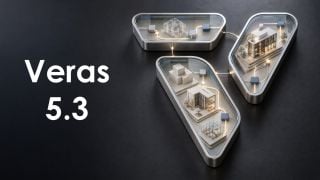
Veras 5.3 introduces NODES, a visual workflow builder now in Beta that lets users generate parametric geometry and bake it directly into Revit, Rhino, or SketchUp. The system shifts Veras from rendering-first to a full generative design platform with interactive design tools.
SketchUp 2025–2026 has added native PBR materials, AI image generation, and real-time rendering plugins like Lumion View, letting archviz artists produce photorealistic images without leaving the viewport. This collapses the traditional design-to-render pipeline.
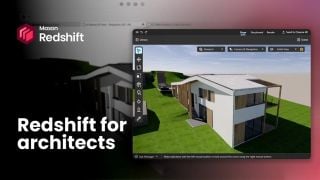
Maxon's Redshift 2027.0 cuts render times by up to 15% through memory optimization and adds official Archicad integration alongside improved materials and live feedback tools.
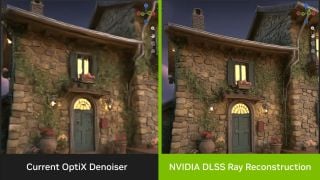
Blender 5.3 arrives November 10 with DLSS 4.5 Ray Reconstruction, an AI-powered denoiser for Cycles that works on RTX 20–50 series cards. The upgrade promises faster interactive lighting workflows at near-final quality.
Chaos released V-Ray for Blender 7.4 with Windows ARM64 compatibility, Phoenix Ocean textures for exterior scenes, Quick Sun Caustics for realistic lighting, and tools to organize large asset libraries and migrate from Blender's native renderer.
Maxon's October 2026 release adds procedural vegetation scattering, reworked GPU memory management in Redshift, and liquid simulation—streamlining environment work and viewport iteration for archviz studios.
A free community plugin now lets 3ds Max users with older GPUs access neural rendering via DLSS 5, potentially speeding up renders without hardware upgrades.
Blender 5.3 arrives November 10 with DLSS 4.5 Ray Reconstruction, an AI-powered denoiser for Cycles that works on RTX 20–50 series cards. The upgrade promises faster interactive lighting workflows at near-final quality.
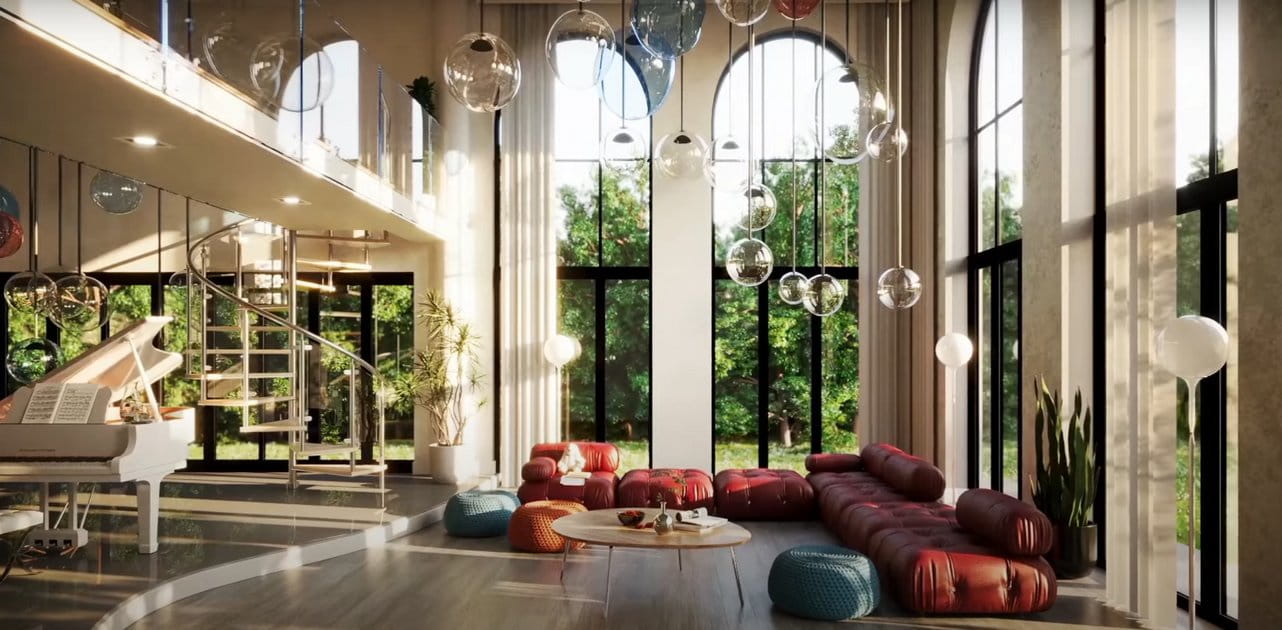
In this walkthrough, we guide you through the process of building a polished 3D interior scene inspired by the cover of Archmodels vol. 306 – Table Sets.


 Customer zone
 Your orders
 Edit account
 Add project
 Liked projects
 View your artist profile










COMMENTS