Search
Cart
Your cart - 0 items
Total: € 0
Total: € 0
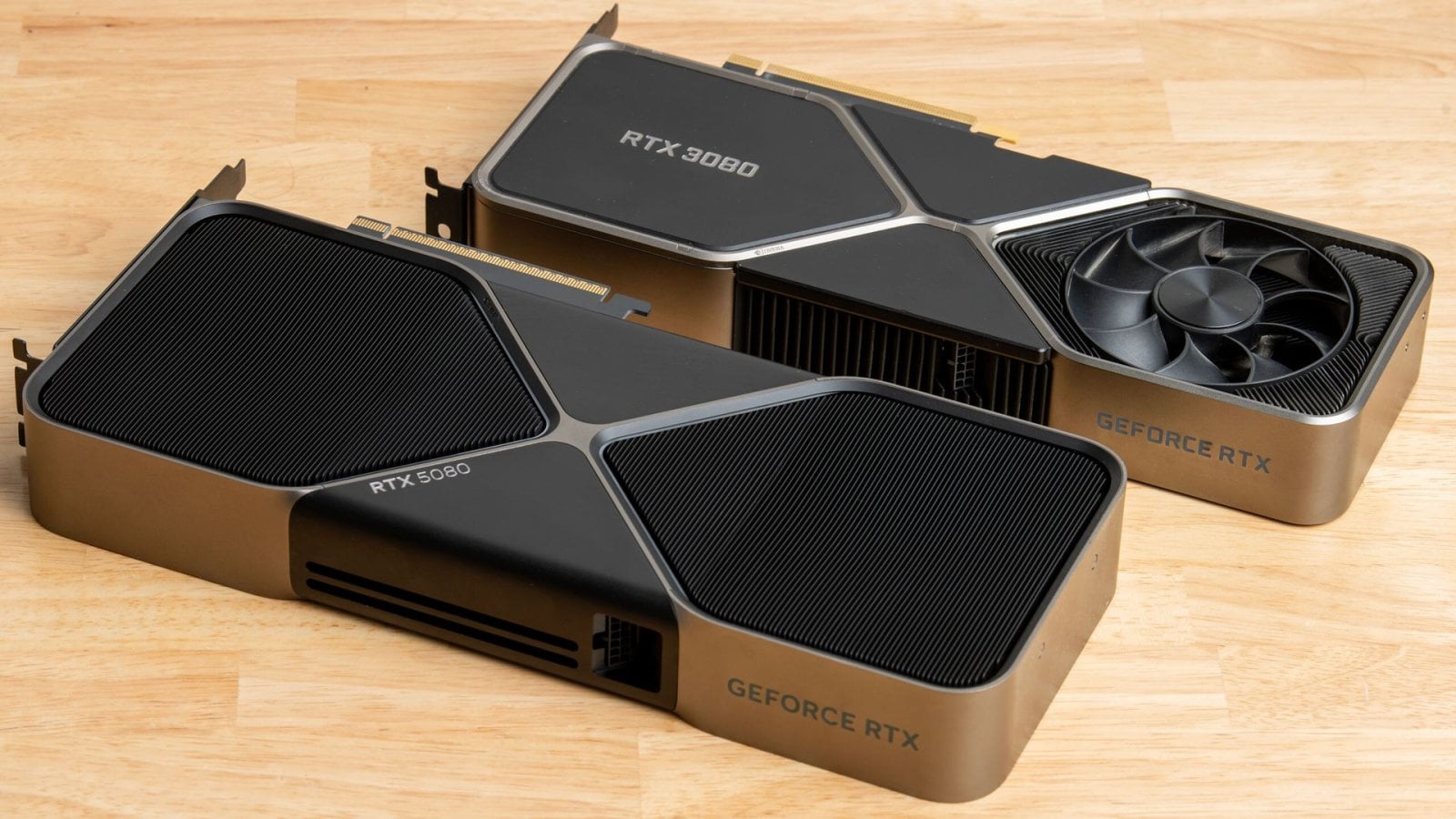

Nvidia's RTX 5080 launched at $999 in January 2025. Within two months, the card was selling for $1,979 to $2,000 at major US retailers, a doubling that reflects a sharp reversal in graphics card value economics. Stock is scarce; according to Hardware Busters, "B&H's listings show the shift neatly. Older entries at lower prices are still on the site, but they are flagged as temporarily out of stock. Everything you can actually put in a cart is priced at $2,000 or more."
The RTX 5080 now costs roughly the same as the RTX 5090, which launched at $1,999. That price inversion - a mid-tier card reaching flagship pricing - signals a fundamental supply problem rather than simple demand. The RTX 5080 carries 16GB of GDDR7 memory, and GDDR7 availability has become the bottleneck. Memory manufacturers are prioritizing high-margin HBM (high-bandwidth memory) production for AI data centers over GDDR7 for consumer graphics cards, squeezing supply of chips destined for gaming and professional GPUs.
Nvidia acknowledged the constraint in a statement to press: "Demand for GeForce RTX GPUs is strong, and memory supply is constrained. We continue to ship all GeForce SKUs and are working closely with our suppliers to maximize memory availability." The company has offered no timeline for relief.
The shortage is not expected to be temporary. SK Hynix told investors it expects demand to outrun supply through 2030, a nine-year window that will likely keep GDDR7 costs elevated and card availability thin for years.
For render farm operators and studios planning GPU upgrades, the RTX 5080's price collapse destroys the value proposition that made it attractive. At $2,000, the card no longer offers a meaningful step up in cost-per-performance over older generation hardware or the RTX 5090 itself.
Consider three strategies: First, evaluate whether your current RTX 4080 or earlier cards can handle your pipeline for another 18 to 24 months. Delaying upgrade cycles until GDDR7 pressure eases may be the most cost-effective path. Second, if you must add compute power now, reassess multi-GPU CPU rendering (using NVIDIA OptiX on CPUs or third-party renderers) or directional splits toward CPU rendering on your existing farm infrastructure. Third, revisit cloud rendering services and managed render farms as an alternative to capital outlay on hardware you may overpay for today.
The long-term memory constraint means this is not a supply blip to ride out. Studios with fixed render budgets should treat RTX 5080 pricing as structural, not cyclical, and plan hardware cycles and spending accordingly.
Lead image: Tom's Hardware


LEAVE A COMMENT







|

|

|

|

|
 Customer zone
 Your orders
 Edit account
 Add project
 Liked projects
 View your artist profile

COMMENTS