Maxon released new versions of Cinema 4D, Redshift, ZBrush, Red Giant, and Autograph on October 14, 2026. The updates target environment population, real-time preview, and asset preparation—three friction points for archviz pipelines.
Cinema 4D 2027.0's headline feature is the Scatter System, a procedural tool for distributing vegetation, rocks, debris, and crowds across scenes. The system offers multiple distribution modes: Surface Grid, Area Weighted, UV Grid, and Spline Projection, letting artists control placement density and offset without manual asset placement. This cuts production time on large environment scenes, a common bottleneck in architectural visualization.
Simulation capability expands with Liquid FX, which adds spray, foam, and bubble simulation to Cinema 4D's unified system. According to Maxon CEO David McGavran,
"A few years ago, you couldn't simulate a beer in Cinema 4D. Now you can pour it, foam it, spray it and make it look almost as satisfying as the real thing."
For product and beverage visualization, this removes the need for third-party plugins.
Redshift 2027.0 reworks its memory architecture with more granular allocation and improved GPU resource sharing. The change targets studios running mid-range GPUs—the norm in smaller visualization firms—potentially enabling denser scenes without hardware upgrades. Digital Production notes that Maxon has not supplied universal benchmarks to verify the improvements.
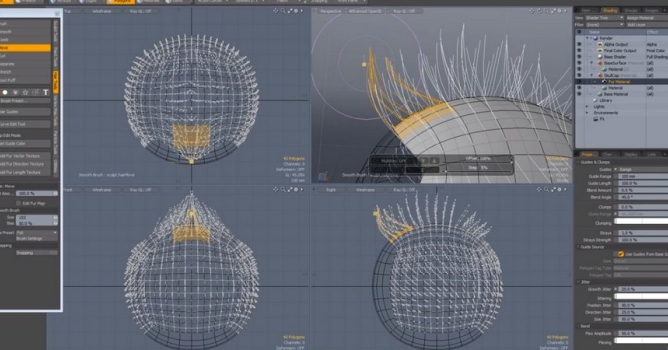
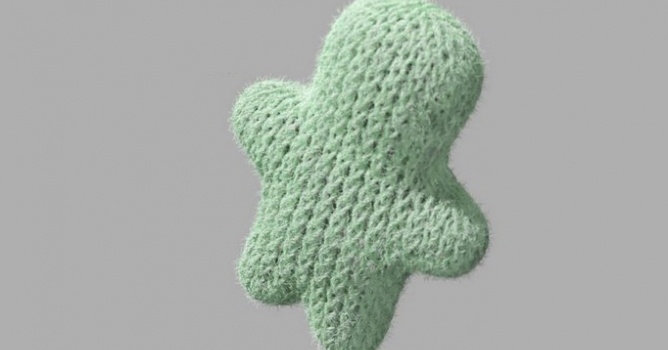
Redshift Live, the viewport renderer, gains refraction, transparent shadows, area light spread, and ray-traced depth of field. These additions aim to shorten the feedback loop between viewport preview and final render, reducing iteration time. A new procedural Fur & Textiles system generates fur, fibers, woven textiles, and knitted materials at render time, reducing reliance on pre-baked asset libraries for close-up material work.
ZBrush 2027.0 adds an integrated UV Editor with UDIM support and texel density controls, letting artists create and refine UVs directly inside the sculpting application. Selection Sets save and recall Polygroups, masks, Polypaint, morph targets, and UV configurations, streamlining asset preparation before export to renderers or asset libraries.
Red Giant 2027.0 introduces Scene Light, an AI-powered depth-aware relighting tool for After Effects, and Maxon Noise for Universe, bringing procedural noise patterns to compositing. Autograph 2027.0 adds MCP Server support, enabling AI agents like Claude to operate its tools, and direct copy-paste of 3D elements from Cinema 4D.
What this means for archviz workflows
The Scatter System directly addresses asset population in large environments. Rather than placing trees, rocks, or architectural details by hand, artists define rules and let the tool distribute them—a pattern that works for both organic and geometric elements. Combined with Redshift's memory improvements, mid-range GPU owners can build and preview denser scenes without hitting memory ceilings or rendering to farm out work.
Redshift Live's expanded feature set—particularly refraction and ray-traced depth of field—closes the visual gap between viewport and render faster, shortening preview-to-final loops for client reviews. The procedural Fur & Textiles system lets you avoid storing hundreds of fabric or upholstery variations as textures, instead generating them on demand at render time.
ZBrush's UV Editor is incremental but valuable: props destined for Archmodels-style asset libraries can now be fully prepared—sculpted, mapped, and configured—without switching applications. For studios working in Redshift, the combination of these tools reduces the traditional bottlenecks between modeling, texturing, and rendering.
Maxon One remains available at $1265 per year, and includes Cinema 4D, Redshift, ZBrush, and the Red Giant suite.
Sources
Lead image: CGPress






 Customer zone
 Your orders
 Edit account
 Add project
 Liked projects
 View your artist profile










COMMENTS