Ve-Day anniversary. End of World War ll in europe
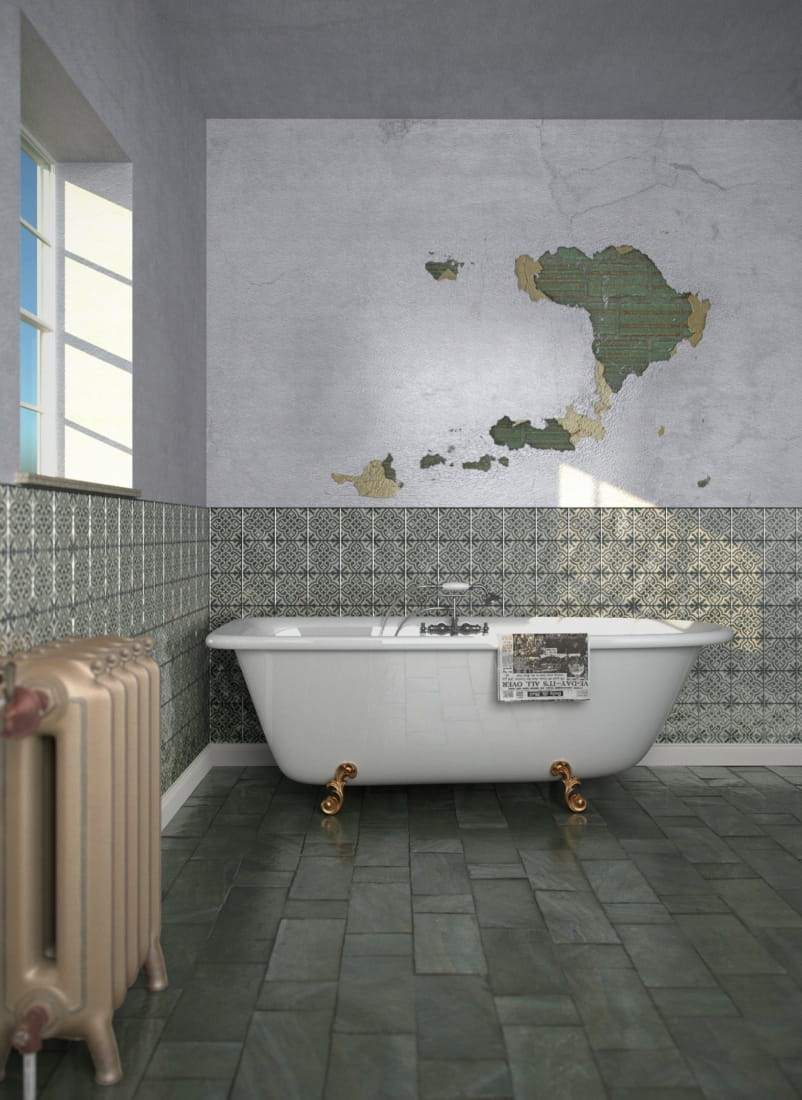
For the 75th anniversary of the end of World War ll in Europe (8 May 1945), I wanted to recreate an hypothetical scene of the time. It had to be something bitter to show how the victory was just apparent if we looked back at what we lost, and foreseeing what would have happened after with the division of Europe. Hope you appreciate, let me know what you think :) .
Modelling, texturing, lighting: 3Ds Max
Renderer: V-Ray
Post-edit: Photoshop
220870
I started by selecting the symbols that would have been added to the scene. The elements needed to tell a story.
I needed something that hints the time – the newspaper.
Something that expresses the idea of bombing of the war but also the profound time of separation that Europe was about to enter– the cracks on the wall.
A setting that both represents the suspense of Cold War and the taste of the time. I chose a bathroom because to me it is the place where men are stripped of their armour and are truly fragile.
MODELLING
220871
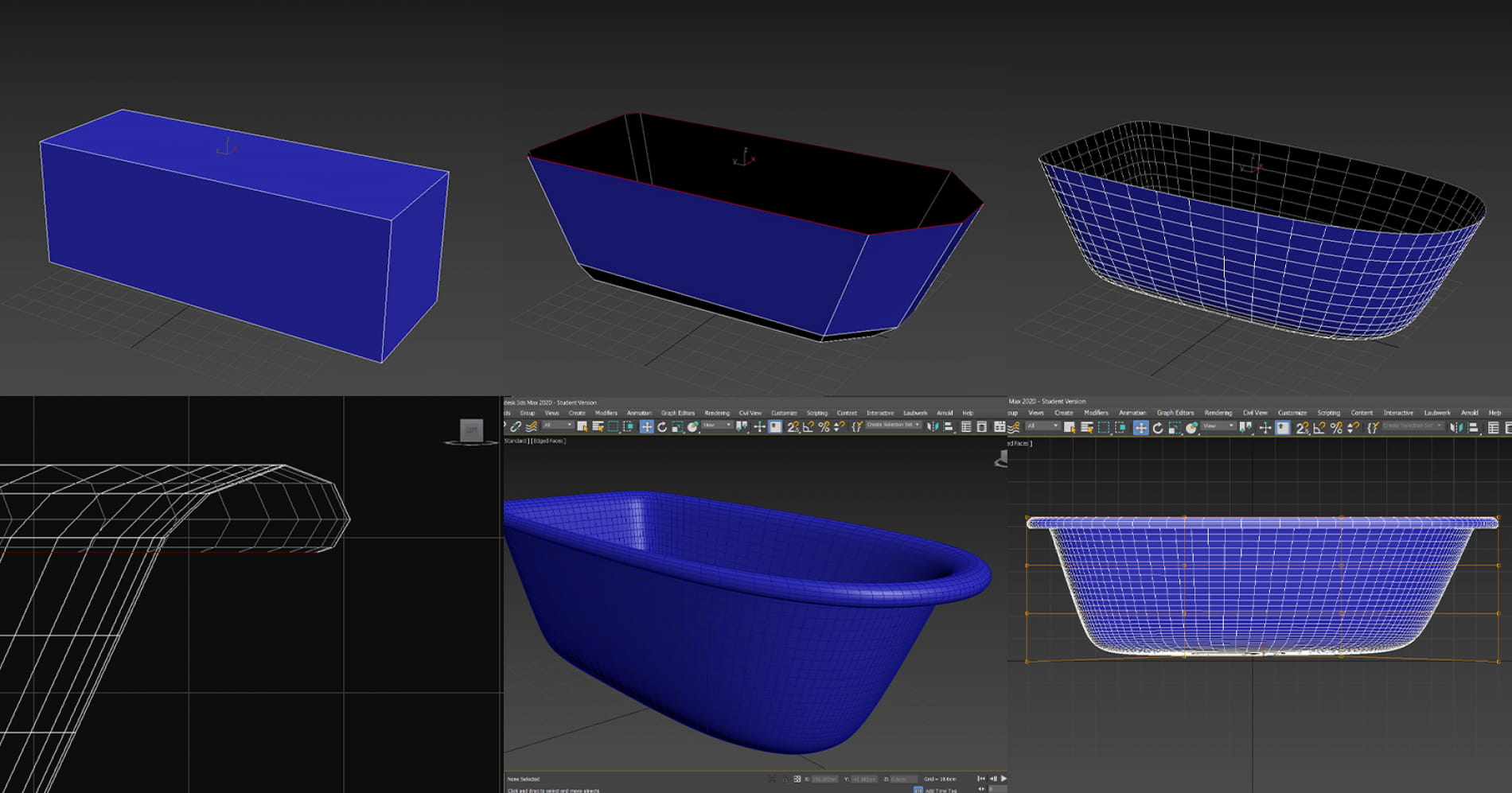
The tub is a box, chamfered, turbosmooth added, border extruded to make it curved, FFD box 4x4x4 to flatten the bottom and tilt it towards the back of the tub.
220872
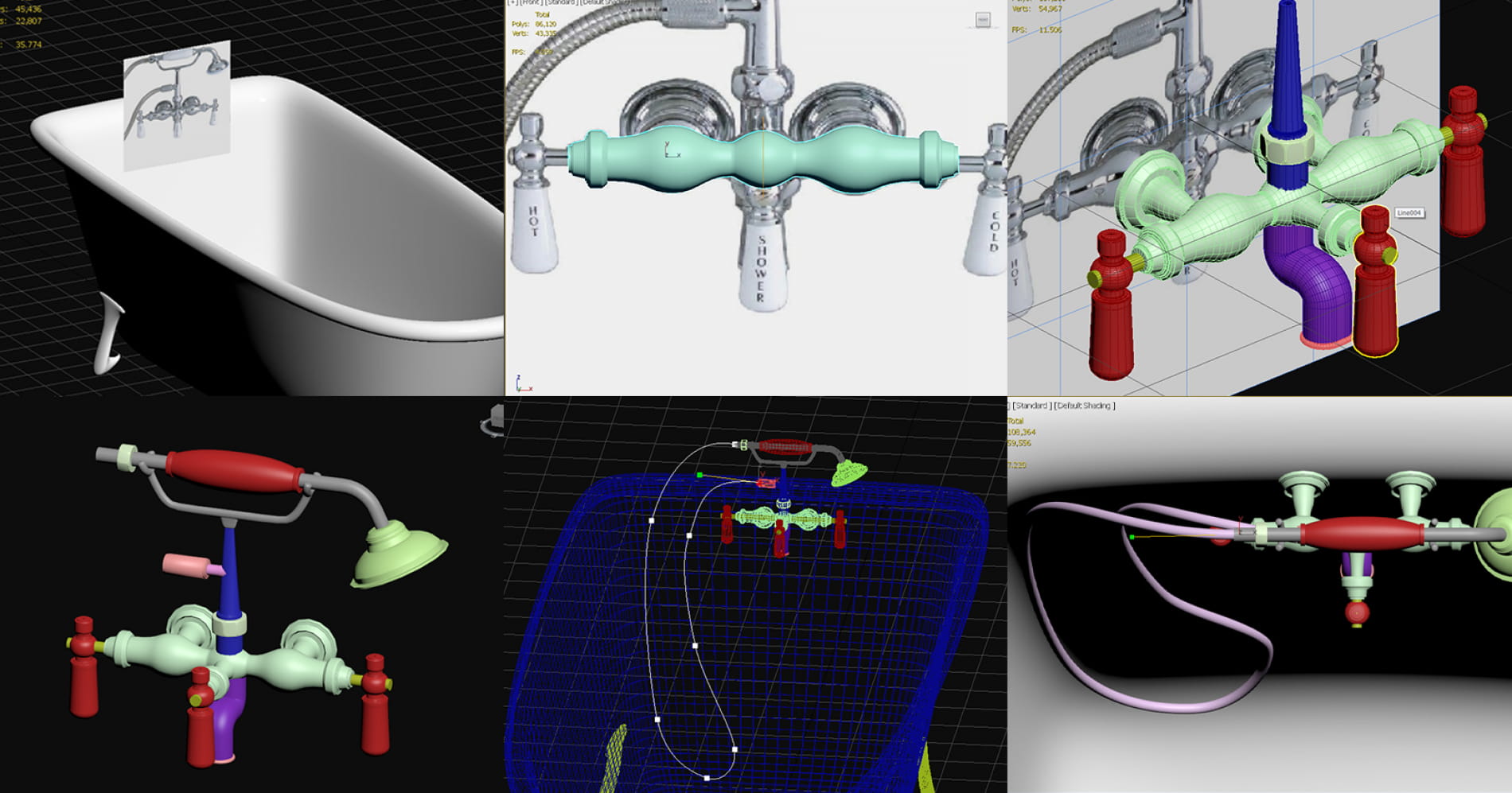
I used a reference photo to model the tap. Most elements are lathed splines, the showerhead holder is poly-modelled, the hose is a 3D spline with a radial thickness.
220873
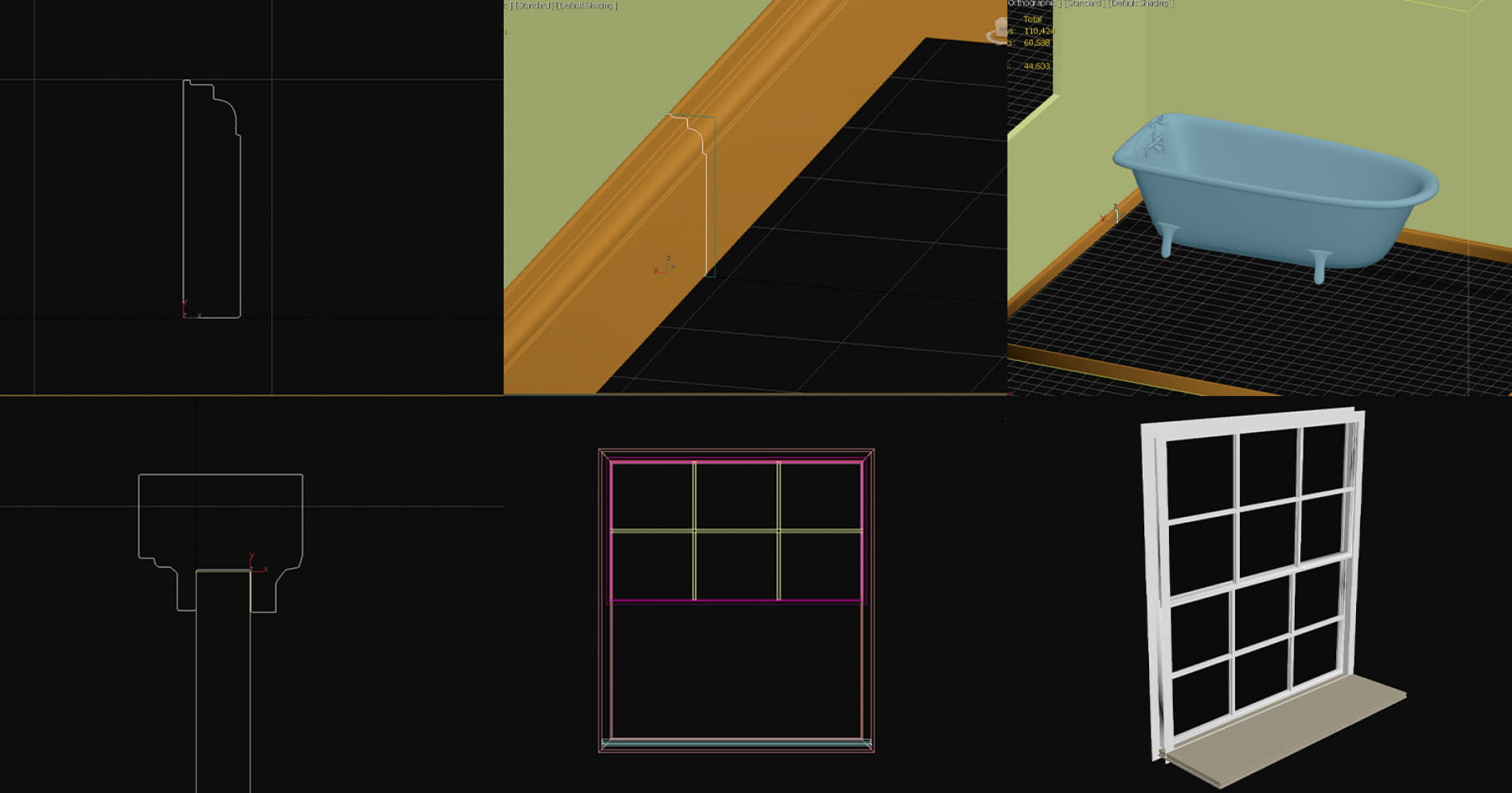
The skirting is a spline with a custom sweep. The window is all poly-modelled, except for the outer frame which is a swept spline.
LIGHTING
220874
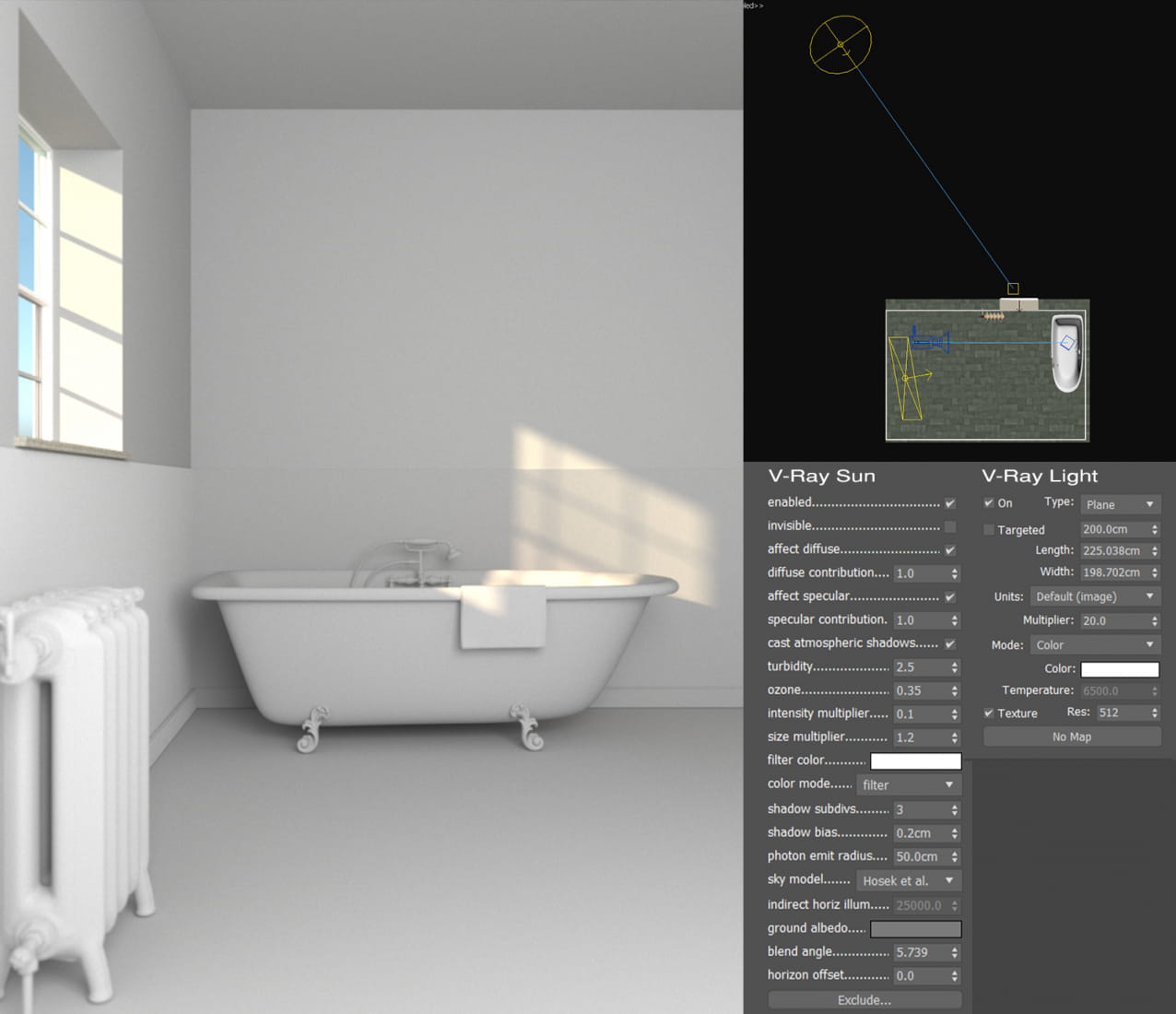
The scene is lit mainly by a V-Ray plane light which is on an angle to give depth to some materials, such as the tiles which looked too flat with a frontal light (see next). Also, a V-Ray Sun projects that soft warm light on the wall.
(The radiator body and the tub legs have been downloaded from the internet and entirely textured by me).
TEXTURING
220875
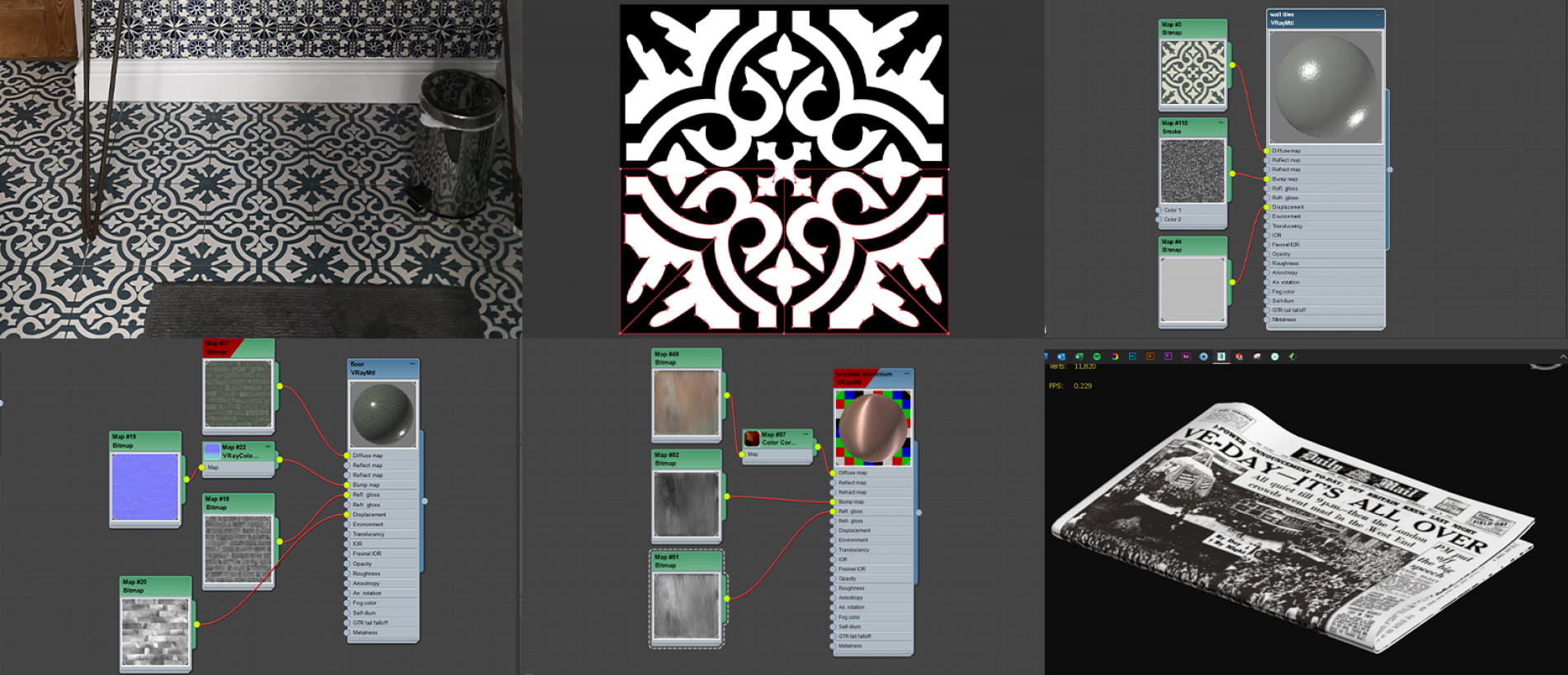
I recreated the tiles I found in a cute airbnb in London, in Illustrator. Then, I made a displacement map in Photoshop so the tiles edges are better hit by the light. Also, I used a procedural smoke map as a bump map to add those imperfections typical of ceramic tiles.
For the floor I’ve used a texture found on Textures.com.
The bronze elements of the radiator pipes have a metallic material with the same map for diffuse, bump and glossiness, and anisotropy set to 90 degrees.
The newspaper is poly-modelled and mapped with a real scan of the Daily Mail from the 8th of May 1945 front page, found online.
220876
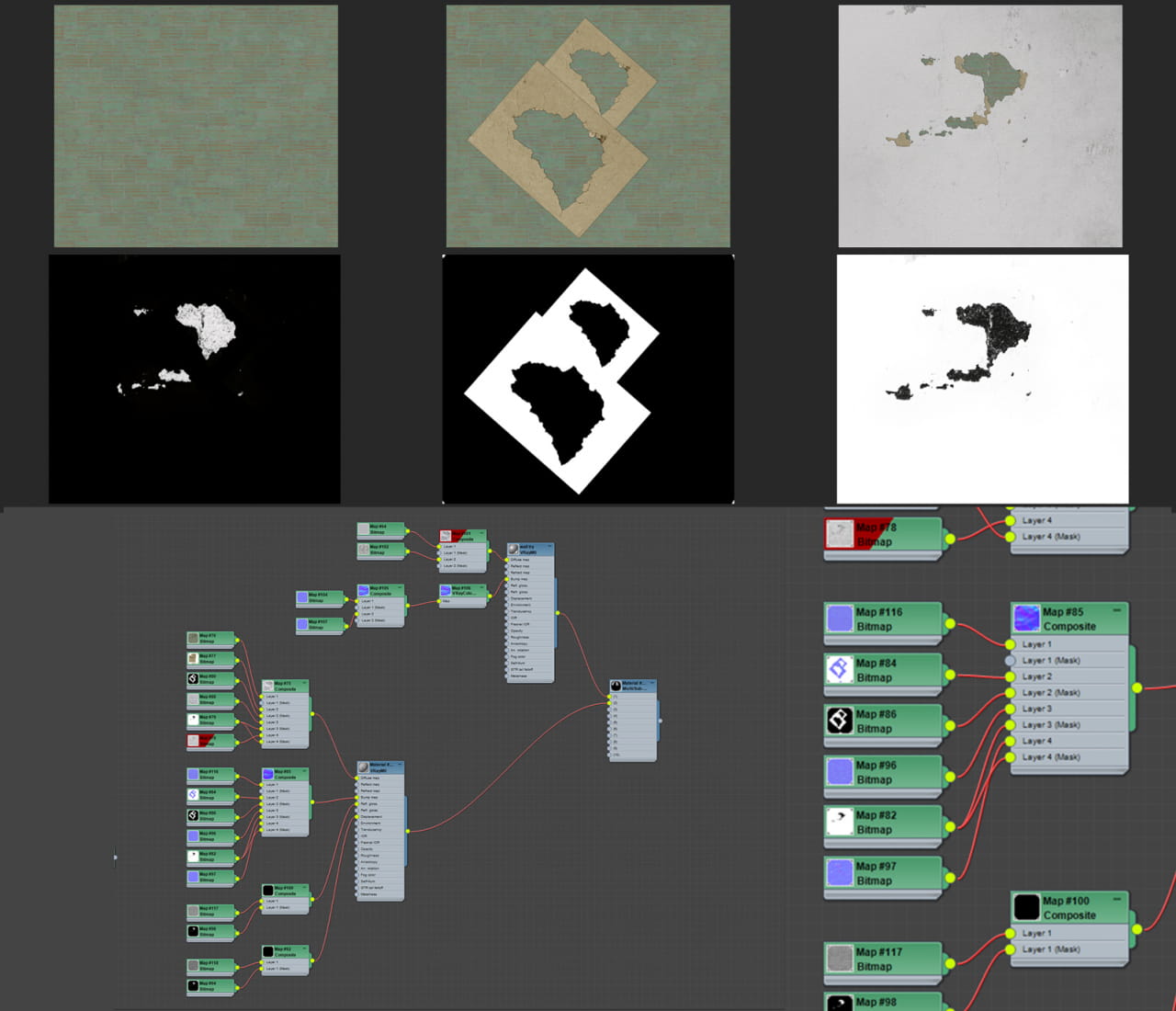
Above you can see how I layered maps and masks to create the effect of the broken walls and the mould, using composite maps. There are four layers of maps, each one masked to allow to see what is below. This structure has been applied for diffuse, bump, glossiness and displacement. I created these each map by editing some textures I found online, in photoshop.
POST-EDIT
220877
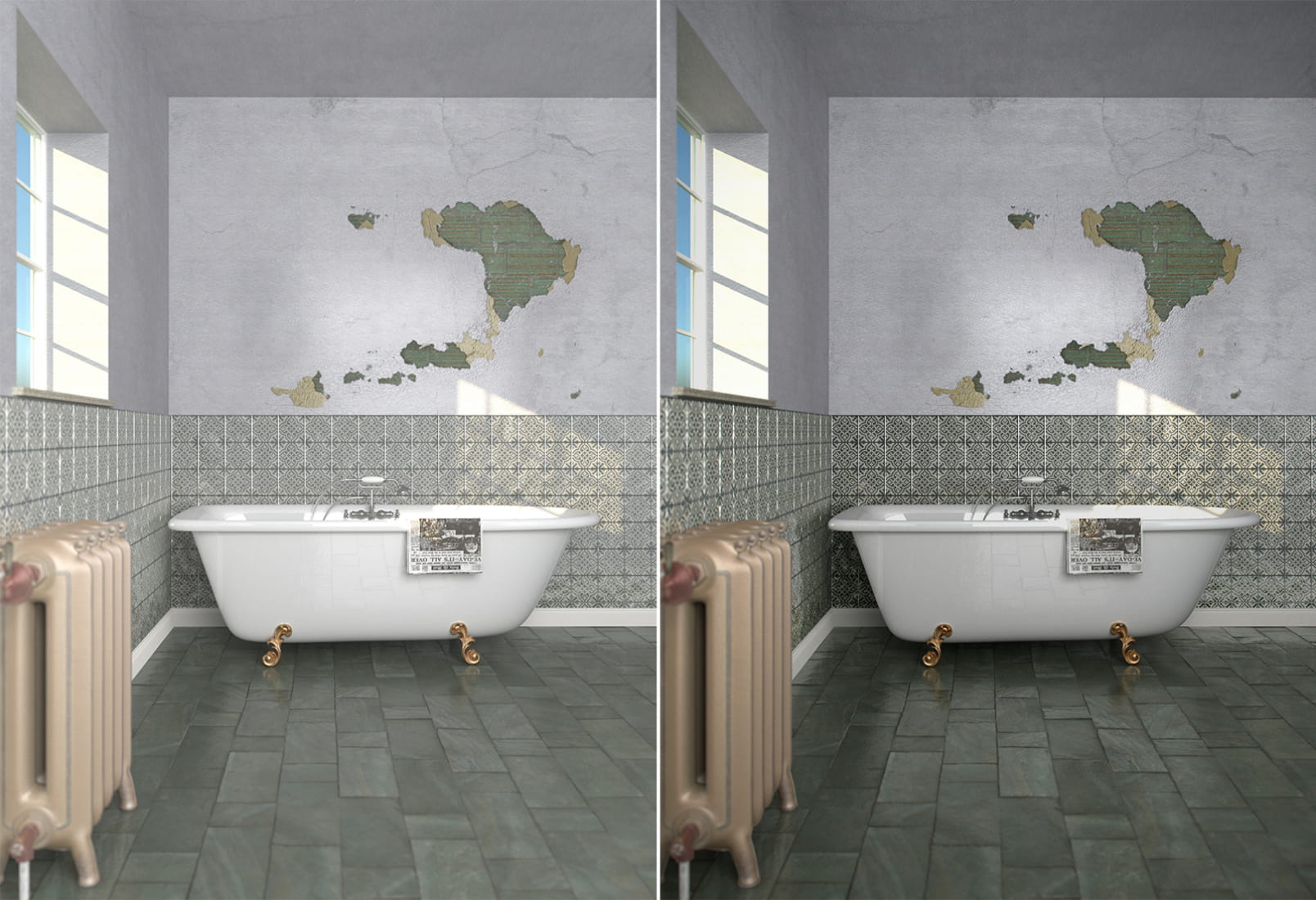
I used many multimatte, GI and reflection layers from V-Ray to post-edit the render in Photoshop using adjustments layers and masks. On top of that I added a high-pass layer (soft light blending mode and masked) to accentuate the depth of field.
Also, to create a more realistic effect, like it was shot with a real camera, I added chromatic aberration and vignette.
Thank you.
Guglielmo Padovan
http://www.guglielmopadovan.com/
Posted on 08.05.2020
You have to be logged in to like this project
 [email protected]
LEAVE A COMMENT




 Customer zone
 Your orders
 Edit account
 Add project
 Liked projects
 View your artist profile